L.G.B.T.Q. Couples

I can group under one of those letters, but the subject of the group bores me. I don’t know if it’s because I never felt I needed a group umbrella under which I could live a validated life. I’ve faced discrimination many times as a woman in the professional workplace, but never was it related to being an “L” (or a “G”; I’m confused about the letters in this group and never know if I’m saying the letters in the right order or if I’ve left off a letter…).

When I first was coupled as an “L”, it was with a “B”, who was mostly an “L”, but was ending an extramarital affair with a man. This had me wrapped around the axle. I was not surprised about my proclivity toward being and “L” given that I only had heartbreakingly strong crushes on women. I wasn’t even thinking sex, it was the companionship, sense of humor, shared experiences and safety I felt with them. And later, yes, the sex, too. 

My first relationship was longterm and it existed before I even had a vocabulary to call it what it was or how it should be identified. It ended sadly, with both of us to blame. Toward the end of this, I had a short “You’re Cheatin’ Heart” type of an affair that I spent more time trying to get out of than I was in it. I consider it a bad “gap” year in “L” couplehood.

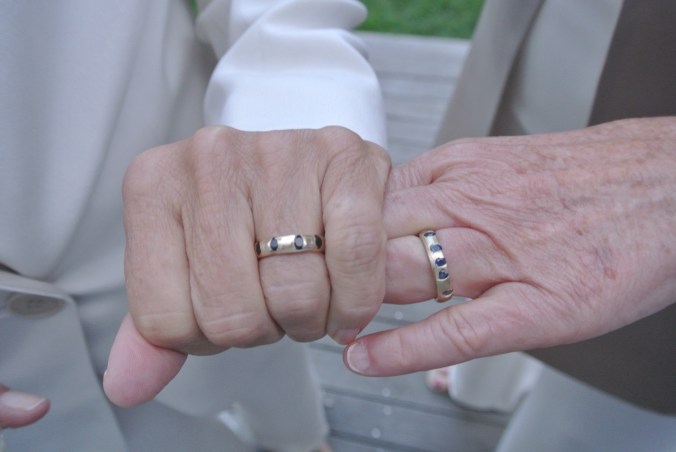
Then, I met my now wife; the best coupling. All of the longings of my lifelong crushes wrapped up in a spunky, sassy, hilarious, comforting and quite handsome “L” with blue eyes in which I could swim for days. Getting married to her was the best day of my life. Many “Ls” were in attendance, as well as non-“Ls”.

On balance I think the labels and alphabet soups are irrelevant. The only “L” that means anything to me is love.
IMG_8148

Shift from Faith

The 60’s and 70’s, God love them, were rife with fashion trends. So many influences from beatniks, mop tops, preppies, pret a porter, elephant bell bottoms, hip huggers, hippie dungarees, fringe vests, velour, embroidered prom shirts, platforms, spike toe boots, earth shoes and Adidas runners. It boggles the mind. Also boggling was how utterly ridiculous it looks in a backward glance to those days.

My childhood friend, Faith, was raised in a fairly conservative family, so clothing trends weren’t followed avidly or with chameleon-like change. Her mother sewed and made all the family’s clothes, save for her father: he had a uniform for work in the Postal Service. 

Despite Faith’s strict upbringing, she had a wild streak in her that I was more than happy to encourage. One summer’s afternoon, bored as planks, we schemed to wander out of the neighborhood to the waterfront, having to cross many streets with traffic. Our goal: procure soft serve cones. Having limited to no funds, we “permanently borrowed” money from my father’s change jar. Enough for three cones, with jimmies.

The afternoon heat made short work of melting the ice cream quickly, much quicker than I could eat it. It melted all over me, creating a Jackson Pollack effect on my white short set and sneakers. Faith had the foresight to wear a dark outfit, thereby avoiding any patterning on her clothes. 

I panicked, realizing I’d be caught in myriad crimes: questionable acquiring of money for this trip; biking too far afield from the neighborhood; and eating sweets too close to dinnertime. But the clothes were going to be the giveaway to this caper.

Faith said I could wear something of hers home and she’d sneak my clothes into one of her mother’s washes (hopefully with bleach). My sneakers were ok, because the chocolate that melted on them looked like mud or dirt, which would only get a routine rebuke from my mother.

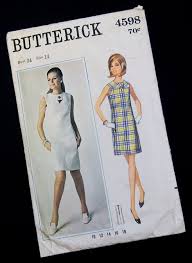
We snuck into Faith’s house and I changed into one of her dresses, a summer “shift”. All would be well. I hoped. When I got home, my mother did a double-take, asking in one breath where did I get the outfit and didn’t I hate dresses (I did. Vehemently.)? I responded saying it wasn’t a “dress” dress, it was a summer shift and that I borrowed the shift from Faith.

“Why”? I hadn’t thought up a reply to such a direct, terse and logical question. I mumbled something about wanting to see if the shift felt cooler than shorts. Skeptical, but growing disinterested, she asked “And is it?”, and I said “Yes.” I quickly feared that she might take this as a green light to start buying me dresses and added “But it’s horrible for riding my bike”.

End of subject. I changed onto my own shorts and top and my mother said she’d wash and iron the shift to return to Faith. And my faith in my guardian angel increased by ten-fold that day. Consequences of guilt related to fibbing and theft would be dealt with in Confession— the magic erase sponge for all bad little Catholic girls’ souls.

cfg

Thirty Five Year Friendship

If I was dyslexic, I might read the above as “Year Thirty Five Friendship”. What would immediately tweak my memory is Year 35. My mother was born in year 35; 1935. If she hadn’t been taken so soon (by whom and to where is open to question or argument), she would have lived longer than the 64 years we had with her.

In short, she died from cancer of the esophagus, because for the majority of her life, cigarettes were her best friend. I’m told she started her friendship with tobacco when she was young, 15 or so. Smoking was cool then, an entree into a different social strata that carried sophistication and urbanity.

My mother was 16 when she graduated from high school. She was bright. She possessed a quick and logical mind. She was a latin scholar. She was quick witted. She had a dream to become a pharmacist and so applied and was admitted to the Massachusetts College of Pharmacy. But my grandmother, in one of a very few mistakes (in my opinion) that she made in her life, told my mother she couldn’t go. That she was too young, that it would be better to work for a year.

My mother got a job as a telephone operator, you know the ones that wore a headset and pulled cords and pegged them in to advance communication. She had exceptional hand-eye coordination (excelling in high school sports enough to consider becoming a coach herself). She was an ace for the job.

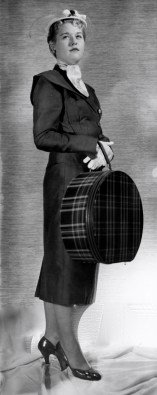
She also was a natty dresser and exuded a strong flair for personal style. And she was beautiful. Not in the “everyone thinks their mother is beautiful” sense, but universally attractive. She was a part-time clothes model, as well. She was a platinum blond, short haired, blue eyed knock out. She had it going.

As she collected paychecks from her full time job, she realized some of the power that gave her: freedom to buy clothes and makeup and nights out and cigarettes. Not surprising to anyone, including herself, she never looked back to Pharmaceutical College. She was fully committed to Ma Bell and her new crowd of older friends.

She was hooked up on a blind date, by my uncle, her boss at the phone company, with his younger brother, an officer in the Military Sea Transportation Service. It was love at first sight (but this is a yarn for anther time).

They married when she was 21 in 1956, and she took on the role of housewife and then mother four years later when she had me. She did what all young women were expected to do: staying at home, raising children, keeping the house clean and tasteful and waiting for her husband’s shore leaves.

She grew distant from her friends who still worked, her mother worked full time, and the people in other two apartments in the triple decker were in-laws all, including the brother-in-law, the former boss who fixed her up with her now husband. She was lonely and wondering no doubt about her decisions and sense of purpose, as do all 20-somethings.

She did have one benevolent friend with whom she kept constant companionship: a pack of Pall Malls. Together they grew the friendship until the friend had no more time for her, and cut her off, literally.

What a price she and we who loved her paid for that friendship. They were besties for life. And death.

img434