The Prison of Self

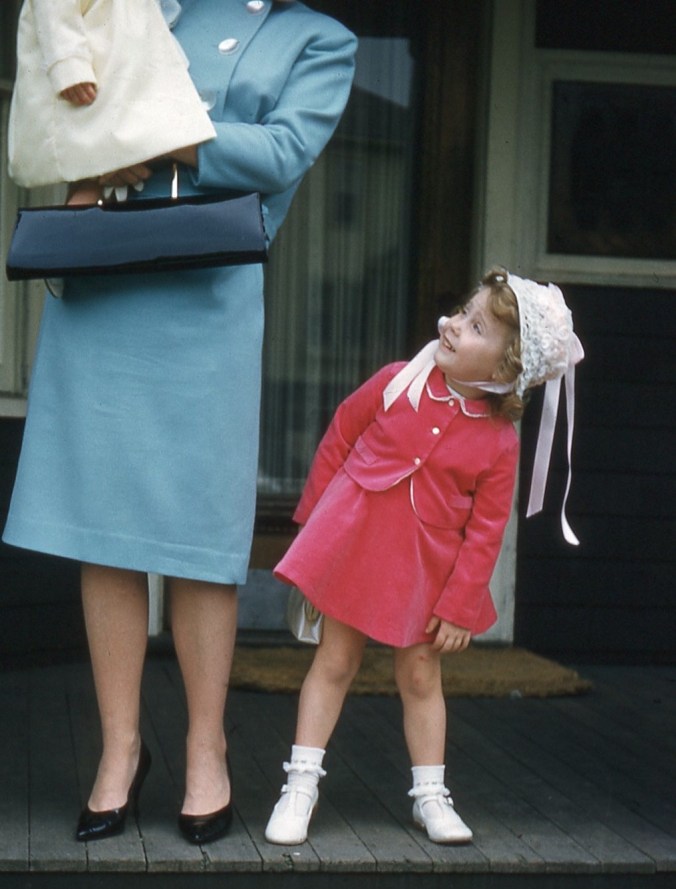
The prison self is made of the strongest bars imaginable. Inescapable save for one key the only the self holds. For many, the self is unaware that it holds the key. The prison of the self can be figurative, theoretical, or real, even. But if you’re it in, it matters not.

Some prisons are depression or addiction: immense expanses whose borders are enormous, until you run into them hard. They hit you hard and repeatedly. Sometimes, unrelentlessly.

Other prisons are smaller, but no less imposing. Self-doubt, guilt, procrastination, or greed. These incarnations are a little more manageable, in that if you try with honest effort and tenacity, you can be free of them, either temporarily or permanently.

Another sort of prison and I’d say the most confining and intimidating is the loss of faith. This is an enigmatic confinement , because first, you don’t know that you’re imprisoned and aren’t moved to do anything to escape the confinement.

What’s the route to becoming aware of your lack of freedom and escaping to a greater sense of liberty? This question has been a seminal one for the greatest thinkers throughout the ages: Socrates, Jesus, Joan of Arc, Hildegard von Bingen, Gautama Buddha, Becket, Shakespeare, Dante, Rosetti, Browning, Yeats, Cather, Bonhoefffer, Rand, Ghandi, Mohammed, Thersa of Avila, St. John of the Cross, King, Churchill, Jordan. All came up with personal hypotheses and treatises that met with acceptance or rejection or worse.

The only way to escape this prison of doubting faith is to self fashion the key with materials consisting of mercy, grace, gratitude, acceptance and intent. Getting through the locks brings one to a place of tenuous serenity that lasts only as long as one keeps “awake”. Being awake is critical to survival in these days of isolation and uncertainty and fear and lack of leadership.

By escaping this intimidation prison of self, one can also fashion approaches to flee confinements and stay open to the graceful possibilities of the present. And to keep roaming freely in the great wide world of the physical and infinite expanses of the metaphysical. And to figure out, one day at a time, as Mary Oliver encourages us, what to do with this one wonderful wild life that we’re given.OLYMPUS DIGITAL CAMERA


Humor and Wisdom 

You don’t now what you’ve till it’s gone…or, absence makes the heart grow fonder…or you never know what you had until it’s taken away. These adages are rooted in wisdom and experience. They’re especially true regarding humor. A sense, or gift or appreciation of humor is priceless. It relieves tension, breaks the ice and encourages participation in otherwise unequal social settings. Humor carries with it descriptive monikers like “dry wit”, ‘biting”, “generous” and “quick-witted”.

It’s a universal language for me and when I encounter people without a sense of it, I’m at a loss with respect to how to relate to them. A person without a sense of humor self-identifies as one with no appreciation for the sense of humor, and they paint themselves in drab colors and they back away from the center of social interactions.

When I’m in the middle of a drab period, the lack of laughter weakens me. It’s a good alarm for me to get my personal “waste” together and climb out of the hole I may have dug for myself. Good unstoppable laughter that brings one to tears is the best of all. All of your defenses are down, and you’re all speaking the same language—a sort of emotional Esperanto.

In these past few weeks, the need for humor could not be greater. The world is turned in ward in hopes of killing the parabolic rise of COVID-19. Isolation from friends and family and travel is already starting to cause social stress fractures. Just knowing I don’t have the freedom to travel at will is depressing. There’s no humor in it. Maybe that’s because there is none to find.

So one looks for another tool to use. Wisdom is one. Wisdom is hard to really define, but you feel it and know it when you see it. For me, it’s a goal to strive for and in the striving, a journey toward enlightenment. Wisdom can also equip one with a sense of serenity; knowing what can and cannot be done in a certain situation.

I know I’m higher that most on the risk factors chart for this virus, given my immunosuppressive disease. I understand that I have to take greater precautions than others. So I observe the warnings with a healthy attitude. I’m not always 100% successful, but I do find victory in the effort.

Maybe that’s self awareness, the first step to looking up and finding wisdom. It makes me smile and maybe see a little bit of humor in my growth. And to have gratitude for another day to garner wisdom and sow some laughter.

img201

Puts Into Focus

In times like now, when the world is muddy, unclear and uncertain, the clarity of the heart and mind, those tools used for musing and thinking take a back seat to focussing on day-to-day “normal” tasks and events. Everything is out of kilter. I feel like a tennis ball: back and forth between highs and lows, good news and bad, and laughter and sympathy. The slightest bit of news I hear has me going up or down, depending on the message. I am thirsty for good news and defensive against the bad.

Today, the bad news for me is the increase of COVID-19 cases, the distress of friends and family who are usually upbeat, the closing of Austin, a city I’ve come to love because of its caring for community, and personal physical back  pain. 

Some of these, I can try to alleviate with meditation, conversation or prescription drugs. Others seem too scary to even try to think about. The “good” today is my preparation for and my anticipation of joining together with my group of adults for a theology/philosophical/bible/social justice discussion group; getting a shoe delivery, and donating to Conspirare, a singing chorale that presents beautiful music and is directed by a man who knows the deep need of people in crisis. And the stock market inched up little.

This good news works in concert with the bad. They don’t cancel other out, rather they show a unified picture of the world, warts and all.  I liken it to setting the focus on a pair of binoculars. There are two lenses that have to work together in order to provide a unified picture. However, to achieve that view, one has to focus each lens separately. I like this analogy because it shows that both right and left lenses have to be considered before the whole comes into focus. Holding both sides as one for a clear focus. Maybe this is seeing in a non-dual perspective: the unified whole that’s been broken into several parts. 

It takes effort to hold both and then to use them as one. And it can be subjective: one person’s focus may be another’s blur. Here’s to hard-earned clarity in being present and awake. And putting it all together in focus and in love.