Working Age Adults

This is an odd adjective to be paired with “adult”. I can think of an exception to the rule of it: I was working when I was fourteen, not an adult but a holder of a social security card. What are the parameters for “working age”? Maybe it’s a typo and should read “working “ages” adults, because in many cases it does.

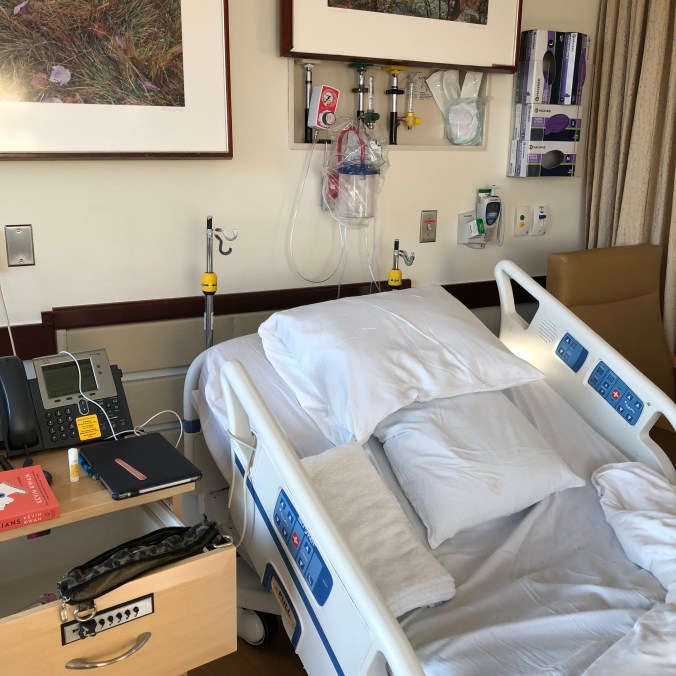
Especially now in these coronary-inducing COVID-19 times. Health care workers (first responders) are tributed with thanks and accolades for the time and expertise they’re supplying in caring for patients during this bizarre time. I can’t fathom the depths of their strength that they reach into every day in order to report to their jobs. Or what they think on their commute: Will I catch it today? Was my husband’s cough last night something I need to watch more closely? Am I going to be a stand-in family member to comfort someone who’ll pass over this day or night?

Each unanswered question carries the weight of anxiety that can’t be easily lifted or carried for too long. But they do bear it and it ages them physically and mentally and emotionally. It makes me worry about them and their families. On a daily basis, they are providing care for the health of tens of thousands. They are an extremely critical component in how this nation proceeds forward amidst this health crisis.

When we’re over it or through it, enough to go back to normal, will their efforts go unrewarded? It was they, not hedge fund managers or NFL Quarterbacks, or Hip Hop artists or cosmetic surgeons who had to keep showing up in increased numbers to care for the sick and the dying. Shouldn’t their compensation reflect the criticality of what they bring to their jobs? 

Sadly, I think it won’t. The general public will go back to spending hundreds of dollars on sports shirts and concert tickets, but would most likely balk at a proposal to double health care workers’ salaries. Yet another lesson in questionable priorities that we as a Nation will collectively not have learned.
 

IMG_5726

Food Stamps 

My first real paying job was a check-out girl in a small supermarket in Massachusetts.I was painfully shy, 15 years old and petrified of making a mistake. “Scanning” was about two decades away in the future. We had cash registers with melmac greasy number keys  and a huge key to enter each item priced. I always hit it harder than necessary; I liked the feeling of power and that finality of the register advancing the paper tape, ready for the next action.

I became confident and proficient at my job and was one of the top cashiers in the store, even without looking at the keys. I also bagged my own groceries with the precision of a 7 year old working on a Lego starship: cold items with cold; produce with apples on the bottom and parsley on the top; a Jenga-like construction of boxes (rice, cereal, jello). I took pride in packing well, not making the bags too heavy and ensuring that the customer would arrive home with her eggs intact.

On one of my shifts, Jackie, who was also a cashier at the store, got off early and was checking out a few items before going home. She came though my aisle with a few items, bread, milk, spaghettios and a carton of Newports. I rang her through and as I entered the carton of butts, the manager drifted over to my register not unlike a hunter who was tracking his prey. He was the manager and co-owner of the store. Pot bellied, bald, black teeth from the pipe he constantly smoked, half shaven, and a lisp so pronounced that you’d get sprayed if you were within 7 feet of him.

He pounces up at my right and wriggles behind the cash register yelling “Did you ring up those cartons of cigaretes?!” “Yes I did.” Then he yelled for the benefit of everyone in the store “Jackie! Are you again using (lisp) food stamps (lisp) for this (lisp) carton of cigarettes? (lisp) You can’t use (lisp) food stamps (double lisp).”

“That’s against the law!”. He didn’t call the police, but he made damned sure that everyone in the store heard what he was saying. He told me to “void” the cigarette ring and total it. I did and Jackie peeled just about the entire amount of food stamps for so few groceries. The manager went out of his way to shame her and her face showed it.

Jackie gingerly pushed the carton back to me and asked for one pack of Newports. Not wanting another “void” on my shift, I didn’t ring them up until I knew that she had the money to pay. I would have rung them up myself but cigarettes could no be sold to minors, especially by minors.

Jackie searched through her ripped pleather purse, hoping to find enough coin that would complete the transaction. So, with with a ratty dollar bill and a pile of coins, she bought her pack of cigarettes. I felt miserably small in that moment. And sad for Jackie and her family who depended on her as the breadwinner 

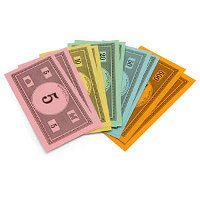
The manager continued to glare at me and at Jackie to make sure that he didn’t lose one penny in revenue. I hated the smirk he wore as Jackie fumbled her groceries, coins and self esteem into a bag. But even though Jackie knew better than to buy cigarettes with food stamps she couldn’t help but try. Monopoly-money

Short Term 

I thought I always understood the nature of time: its fluidity, swift passage, slow unfolding. For some reason, I am gifted with a curious or even useful talent or parlour trick. If someone asks me the time (or the temperature), at any time of day or night, I can guesstimate it within 5 to 10 minutes or degrees without consulting a timepiece or looking outside. I can’t explain it. It’s freaky but does come in handy.

When I’m at the beach or upon waking, I’m as reliable as a clock and can position myself in the temporal universe after day dreaming to the sound of waves or finishing a restorative slumber (or restless night). And in the morning, I can dress accordingly, although I will double check the official temperature on one of my i-somethings just to make sure my interaction with the elements regarding dress is comfortable.

The passage of time right now is very difficult for me to maneuver. The COVID-19 virus has (or should have) put the country’s and most of the world’s inhabitants indoors, to avoid direct contact with people outside your family of those with whom you live. With that isolation order came a blank calendar, removal of appointments and rendezvous and travel that formerly provided the syncopation of the day.

When I was working, I’d relish looking at my schedule first thing in the morning and having blank blocks of time with no meetings or conference calls. It was a time to get caught up, or think, or read. I feared retirement would be a long empty block of unclaimed time.

But as I adapted to a new type of employment, (as well as a new locale to call home), my calendar started for fill in with appointments, social events, exercise, meditation, house “work”, TV binging and some premium nap time. I luxuriated in the freedom to do what I wanted when I wanted. And looked forward to my outside interactions.

Now, those are gone: dinner with friends, home entertaining, spontaneous movie dates, grocery and other shopping, haircuts, bodywork, facials, church and classes. I sincerely miss them all.

Yes, there’s contact via the “interwebs”,  but seeing one’s own face on the screen creates a distraction and the interactions have just a pinch of duality that that cheapens the electronic face-to-face interaction. I miss the true face-to-face conversation. The loss of it really disturbs me more than I’d imagined it would.

What underlies it all is anxiety knowing that there’s no estimate of how long it (the new normal) is going to last. My “short-term” is now undefinable except in 24 hour segments. 

My sense of the long term is undefinable. It’s like being in an Escher drawing: going up stairs that lead to more stairs with no passage to a destination point.

When that destination of the virus going away arrives, (how, I can’t fathom) it will be staggered on a sliding scale, depending on one’s comfort level with safety not being in numbers, or one’s critical need to get back to a paying job or one’s addiction to travel. 

I don’t believe my meanderings in time as I knew it pre-COVID-19 will ever be the same: carefree. I believe I’ll always be suspicious of being out of my home and coming in contact with a stubborn remnant of the virus. I’ll hug, or maybe shake hands with reservation, or maybe not.

Human interaction is going to be changed regrettably to one of distance for the long term. For the short-term it’s gone and its return will be shaky and sputtering with halting jerks and hesitation.

It will be colored with caution and longing. And framed by bittersweet comparisons to a time before all of this weirdness, when a hug or a group photo or unbridled laughter or a series of sneezes existed as its own glorious moment in time when the action was unencumbered by fear or distance or second guessing. When “being” in the present and in the presence of others was gloriously taken for granted.